
Atmospheric doom metal: admittedly, not something I’m the most familiar with. In this instance, I’m experiencing The Sun Through A Telescope for the first time, and I can say this: it’s quite heavy on the ambience. Since I’ve not the experience or breadth of knowledge for a real and legitimate album review, this is more of a “first impression” sort of post. I do have pretty extensive experience with different types of atmospheric musics such as serial composition, minimalist composers, post-rock bands, etc. as well as both doom and black metal (even atmospheric black metal bands like Wolves In The Throne Room) so I’m quite interested in hearing this project.
First, a little about the double EP Orange and Green/Black that I’m writing about. It’s a project done by a man named Leigh who hails from Ottawa, Ontario under the name The Sun Through A Telescope that was recorded and released on two separate cassettes (though you can download the .mp3 versions).
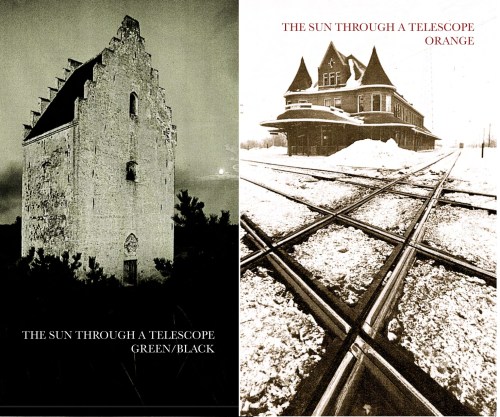
I’m 100% unsure of which EP to start with, so I selected Orange in a rather arbitrary manner. From the start you get a very good taste of what’s to come, hearing what I can only imagine are sounds from some sort of ocean area. Birds squawking, gentle movement of water, and there are some light synth noises and some feedback… then out of nowhere a black metal section blasts you in the face. The first few songs go a lot like that, with metal carefully woven into some very cool atmospheric textures. When things truly start to get interesting are when the vocals come in on “Glowing Halowe’en Eyes” — they’re pretty haunting, having been processed through some sort of filters, they’re quite reminiscent of the vocals at the begging of “Akeldama” by the Faceless, and at some other points they’re totally unleashed being delivered with pure and unadulterated emotion (often in the form of a powerful shriek).
The rest of Orange continues on in the same manner, tastefully swapping out noise, doom, black metal, and atmospheric sections while introducing more unique nuances to keep the listener’s attention. Green/Black? Not so much, it starts off with a thirteen-minute monster of an atmospheric track, using some of the most haunting tones and harmonies I’ve heard, then moves into the visceral three and a half minutes of “The Priest With One Black Hand”–a raw and heavily hardcore punk influenced track. Right after the album takes another slow but extreme turn where you get the first clean and unprocessed singing on the set of EPs.
Overall I really enjoyed listening to the double EP. It is very well recorded and mixed, and is full of really interesting content. Whether it’s music, bird noises, running water, screaming bloody murder, or whatever else is on this album, it was all very pleasant to listen to. I can’t say I’d recommend this as a listen for anyone with a short attention span, but I will say that it’s certainly worth checking out if you feel like taking sixty-three minutes of sonic exploration.
Here, check out the song “Glowing Hallowe’en Eyes” for a taste of what you can expect from the album:
If you’re interested in checking out more, each EP is a measly $2.50 at The Sun Through A Telescope’s Bandcamp, so head over and check that out.

 Enter The Ciem Show and their 2010 release Lifelike Scenes. Sonically, the album might be able to find its home right alongside Dream Theater and Symphony X, but I’d be lying if I said that was the whole story. This album floats around through all sorts of metal styles; from the djent intro of “Scene II: Evolution Sickness: i. Existing Without Being / ii. Being Without Existing” to the melodically difficult “Scene V: Effects of Somnambulism” The Ciem Show aren’t afraid of mixing in whatever inspires them to their music.
 Even considering the albums couple shortcomings, it’s still a great listen and worth checking out if you’re looking for some solid prog metal. You can pick the album up for free from
  I don’t buy that whole “new bands can’t be trve” malarkey. It’s not like they chose to be starting their musical careers two decades after the movement they associate best with occurred. As long as they truly believe in what they’re doing, that’s as true as it gets. Sure, they might not come from a place and feel religiously oppressed by the people that wiped away their cultural heritage, but it doesn’t make their circumstance any less legitimate or meaningful.
 What I find especially mind-boggling is that these stances are often taken by people who have absolutely nothing to do with the culture in which black metal originated, so their feelings of outsiders being unwelcome is absolutely unfounded. By stating that newer bands who aren’t from that specific era in can’t be considered “trve,” what does that mean for all of the black metal fans who are also not from that circumstance? Are they also not “trve?” It all seems just a small amount ridiculous to me. As far I can tell, the “trve” tag has come to just be a pedestal to promote elitism in metal, something I feel there needs to be a lot less of these days. It’s the only thing keeping metal from being a wildly successful genre of music.
 The Heaviest Matter of the Universe